Why Legacy Pet Brands Entering Fresh Food is Good News for Freeze-Dried Formats
Fresh and lightly cooked pet foods are no longer just for niche pet brands.
As you stroll the pet food aisles, you’ll notice legacy pet brands are increasingly launching fresh or lightly cooked lines.
For smaller brands, at first it can feel like the competition is encroaching on your territory and advantages.
But zoom out, and the bigger story is this: When the biggest names in pet food invest in real food, they are actually helping to normalize the category, especially for pet parents who haven’t tried anything beyond kibble yet.
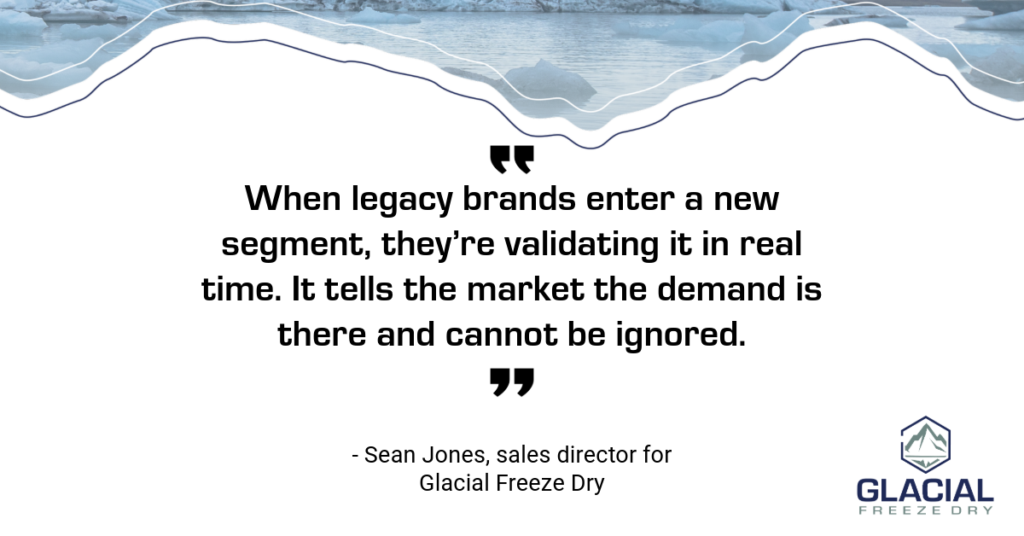
“When legacy brands enter a new segment, they’re validating it in real time,” says Sean Jones, sales director for Glacial Freeze Dry. “It tells the market the demand is there and cannot be ignored.”
Quick takeaways:
● Legacy brand entry signals: “This category is credible.”
● More competition can grow the category, not just divide it.
● Fresh often becomes the first step; whole-food freeze-dried formats can follow.
More attention on real pet food is win-win
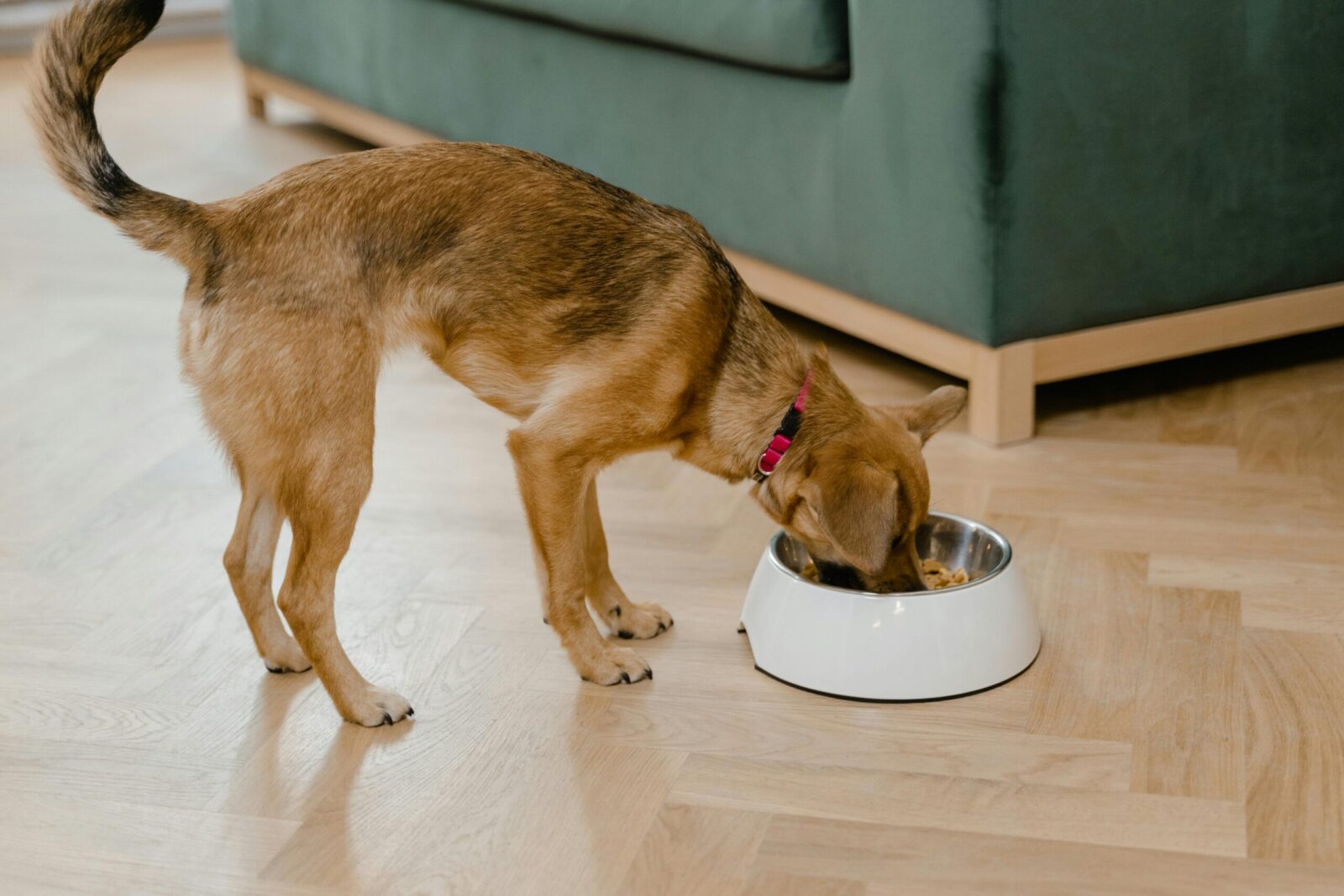
Fresh and lightly cooked pet food is growing fast. U.S. retail data from 2021 to 2023 showed fresh dog food sales up 86.5%, and fresh cat food sales up 53.8% (Kerwin, 2024).
When large incumbents move in, they accelerate awareness, reduce perceived risk for consumers, and bring more shoppers into the “real food” conversation.
That expanded attention can create a natural on-ramp toward raw and freeze-dried formats as pet parents keep learning and raising their standards for what they feed their pets.
When major manufacturers launch fresh lines (or acquire their way into the space), they bring three things that smaller brands typically can’t match at the same scale:
● Visibility: More ads, more shelf space, more “this is normal” reinforcement
● Distribution: More doors, better placement, more trial
● Trust transfer: Hesitant buyers think, “If they’re doing it, it must be legit.”
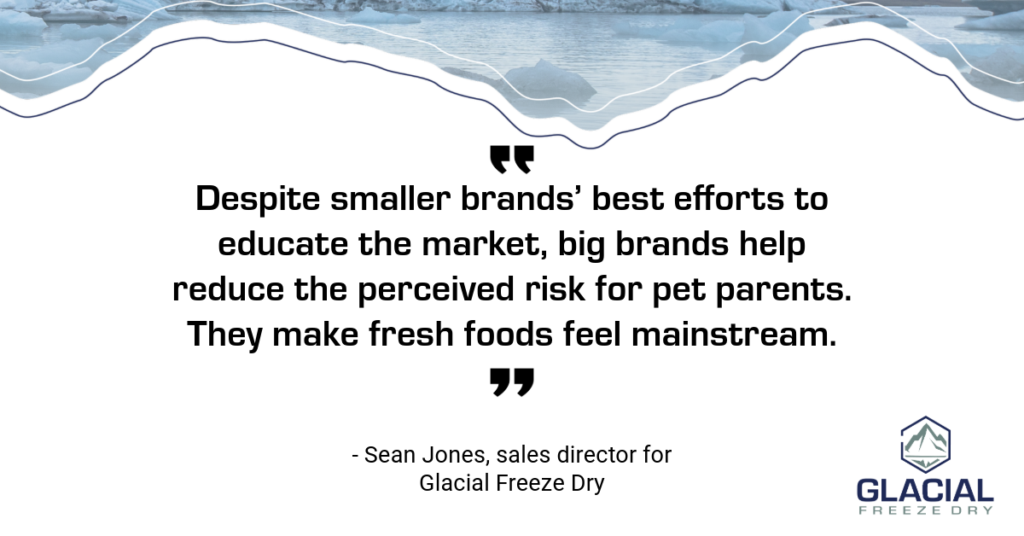
“Despite smaller brands’ best efforts to educate the market, big brands help reduce the perceived risk for pet parents,” Jones says. “They make fresh foods feel mainstream.”
This is what researchers call category legitimization — when a growing market gains credibility faster because powerful incumbents publicly back it (Navis & Glynn, 2010). In plain language: it helps the whole category get adopted.
Competition that grows the pie (not just the rivalry)
If several large brands enter fresh at once, it looks like a fight for share. But there’s another dynamic happening at the same time: a form of competition that increases total demand, labeled “co-opetition,” which is a strategic blend of cooperation and competition.
Jones says you can look at the example of the long-standing and fierce rivalry between the two major brands in the soda world.
“Coke and Pepsi definitely fight each other for market share — but together they made soda a default option in people’s minds,” he says. “When both brands are visible, the category as a whole wins.”
When consumers see repeated messaging from multiple brands, they remember the category, not just one product. That repeated exposure drives trial and accelerates adoption (Brandenburger & Nalebuff, 1996).
Why this helps raw + freeze-dried brands
Fresh and lightly cooked products from legacy brands can be an accessible starting point for pet parents who are new to real food. It feels like a manageable change: the packaging is still familiar, and they have used and trusted the brands.
But that just opens the door for most pet parents for further inquiry and education.
As they learn more, they start asking better questions:
- What’s the ingredient panel really telling me?
- How processed is this functionally?
- Do I want fewer additives or synthetic fortification?
- Is there a format that keeps whole ingredients intact and fits my lifestyle?
That’s where raw and freeze-dried brands can benefit. Fresh can validate the why behind real food, and then other formats can fulfill the “now what’s the cleanest, most aligned option for my standards?” moment.
“Fresh gets more pet parents to cross the mental bridge that real food matters,” Jones says. “After that, pet parents are more willing to dive deeper and search for the best solution for them and their households.”
Brands that produce raw or freeze-dried whole-food diets can then benefit from the “fresh halo” effect.
Pet parents are the real catalyst
Corporate investment from legacy brands definitely helps build the runway, but the fuel behind this shift is still the modern pet parent — especially younger demographics — who are demanding transparency, cleaner labels, and feeding formats that mirror their own wellness values (Cleaver, 2025).
Rodney Habib has been a loud voice for consumer-led change and has helped educate pet parents to expect more from brands (Habib, 2022). And once consumers start reading labels differently, all pet brands need to respond to that shift in demand.
“The biggest change isn’t what companies want to sell,” Jones says. “It’s what pet parents now expect as the baseline.”
Building a freeze-dried brand? Here’s how to ride this wave:
- Fresh growth can be a strategic opportunity — if you’re ready for this second wave of consumers who start asking deeper questions.
- Lead with education, not persuasion
- Explain tradeoffs plainly. Help pet parents understand what changes when you shift formats.
- Make your ingredient story simple enough to repeat
- If someone can’t explain your product in one sentence, you’ll lose momentum at the shelf and online.
- Build an “on-ramp” offer
- Toppers, treats, trial sizes — something that feels like a low-risk first step.
- Back your claims with clarity
- Ingredient transparency, sourcing explanation, and straightforward process language beat hype every time.
- Assume the buyer is comparing formats — not just brands
- Your competition may not be another freeze-dried SKU. It may be “fresh vs freeze-dried” as a decision for your target pet parent.
Quick checklist: Are you ready for the ‘second-wave’ pet parent?
You’re in a strong spot if you can answer “yes” to these:
- Can you clearly explain how your format supports whole-food goals?
- Do you state what you don’t include (and why) without sounding preachy?
- Do you have a simple entry point for first-time real-food buyers?
- Can you help a retailer or direct-to-consumer shopper understand “next step” progression?
To sum it up, legacy brands entering fresh and lightly cooked pet food is more than a competitive moment — it’s a market-shaping one. Their investment expands awareness, normalizes real food feeding, and brings new pet parents into the category.
And as education spreads, many pet parents keep moving: from curiosity to trial to commitment. That’s where raw and freeze-dried brands — and whole-food formats broadly — stand to benefit.
FAQ
Does fresh growth hurt freeze-dried brands?
Not necessarily. Fresh can expand category attention and act as an on-ramp. Some pet parents start with fresh and then explore other whole-food formats as they learn.
Why does legacy brand entry “validate” the category?
Because it reduces perceived risk. Big incumbents signal the category is stable, safe, and here to stay, so more consumers feel comfortable trying it.
What is co-opetition in simple terms?
It’s when brands compete, but their combined visibility and messaging increases total category demand so the overall market grows.
Why do pet parents “trade up” from fresh to other formats?
Often because they start looking harder at ingredient panels, additives, fortification, and the processing tradeoffs behind each format.
What should whole-food brands do right now?
Double down on education, simplify the ingredient story, and create low-risk entry points that help new shoppers try and stick with real food routines.
References
Brandenburger, A. M., & Nalebuff, B. J. (1996). Co-opetition. Currency Doubleday.
Cleaver, L. (2025, June 23). General Mills launches fresh pet food line, brings Edgard & Cooper to U.S. market. Petfood Industry.https://www.petfoodindustry.com
Habib, R. (2022, August). LinkedIn post. LinkedIn.
Jones, S. (2025, May 12). LinkedIn post on market strategy. LinkedIn.
Kerwin, N. (2024, Sept. 25). Refrigerated pet food category to continue its rise. Pet Food Processing.
Kerwin, N. (2025, Feb. 20). Hill’s Pet Nutrition enters fresh pet food category through acquisition. Pet Food Processing.
Navis, C., & Glynn, M. A. (2010). Administrative Science Quarterly, 55(3), 439–471.
Tyler, J. (2022, Jan. 28). Nom Nom Now acquired by Mars Petcare. Pet Food Processing.
Comments are closed